

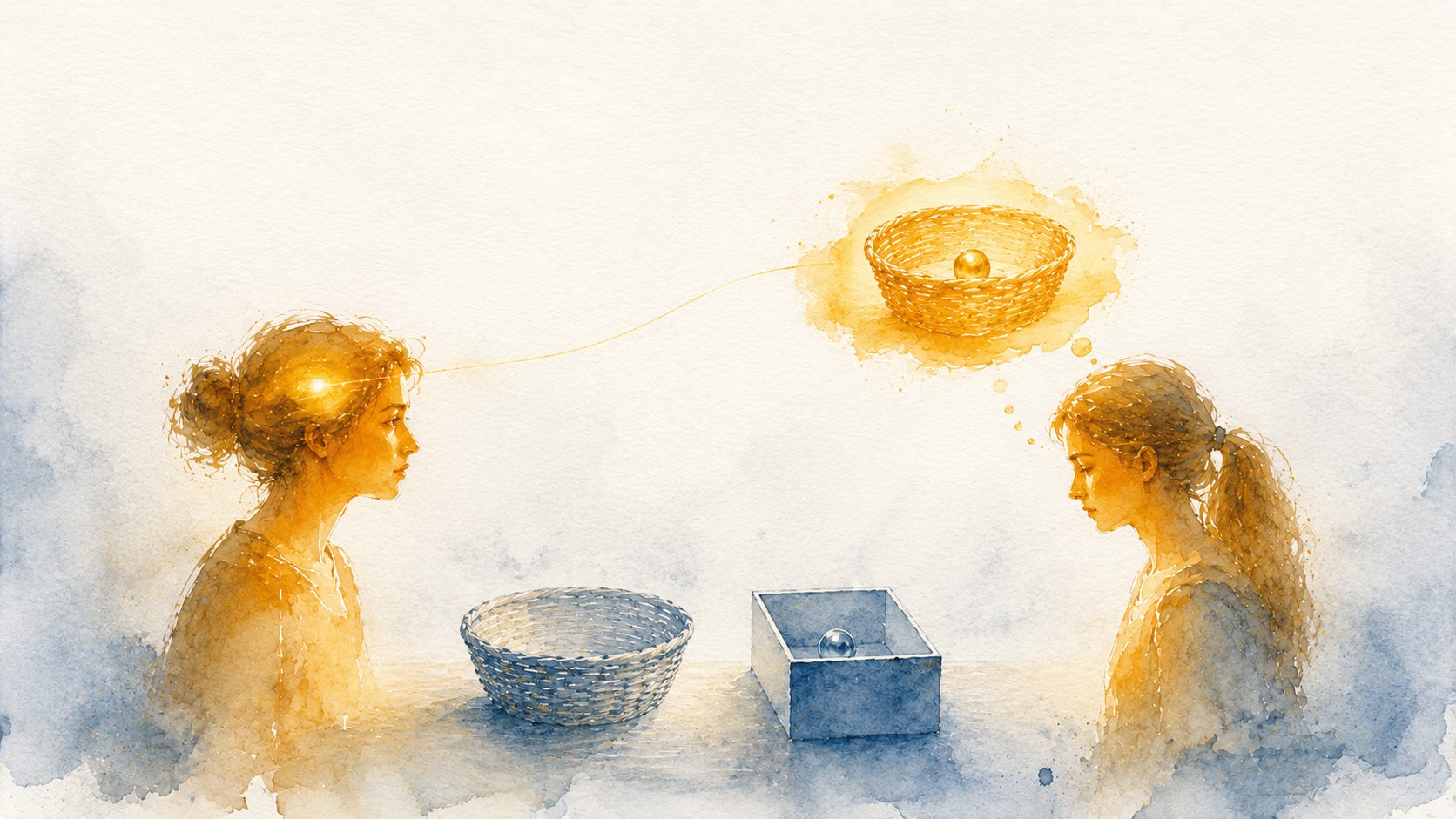
A three-year-old and a five-year-old watch the same short puppet show, and only one of them understands it.
A puppet named Sally puts a marble in a basket and leaves the room. While she is gone, a second puppet, Anne, takes the marble out of the basket and hides it in a box. Sally comes back. Now the child is asked one question: where will Sally look for her marble?
The five-year-old says the basket. Obviously the basket, because that is where Sally left it and Sally did not see it moved. The three-year-old says the box. Also obviously, to the three-year-old, because the marble is in the box, and the three-year-old knows the marble is in the box, and it has not yet occurred to her that Sally’s head contains something different from her own.
That is the whole test, and the gap between those two answers is one of the most important thresholds in the development of a human mind. The younger child is not less intelligent. She can see, remember, plan, speak, and recombine as fluently as her o…
