

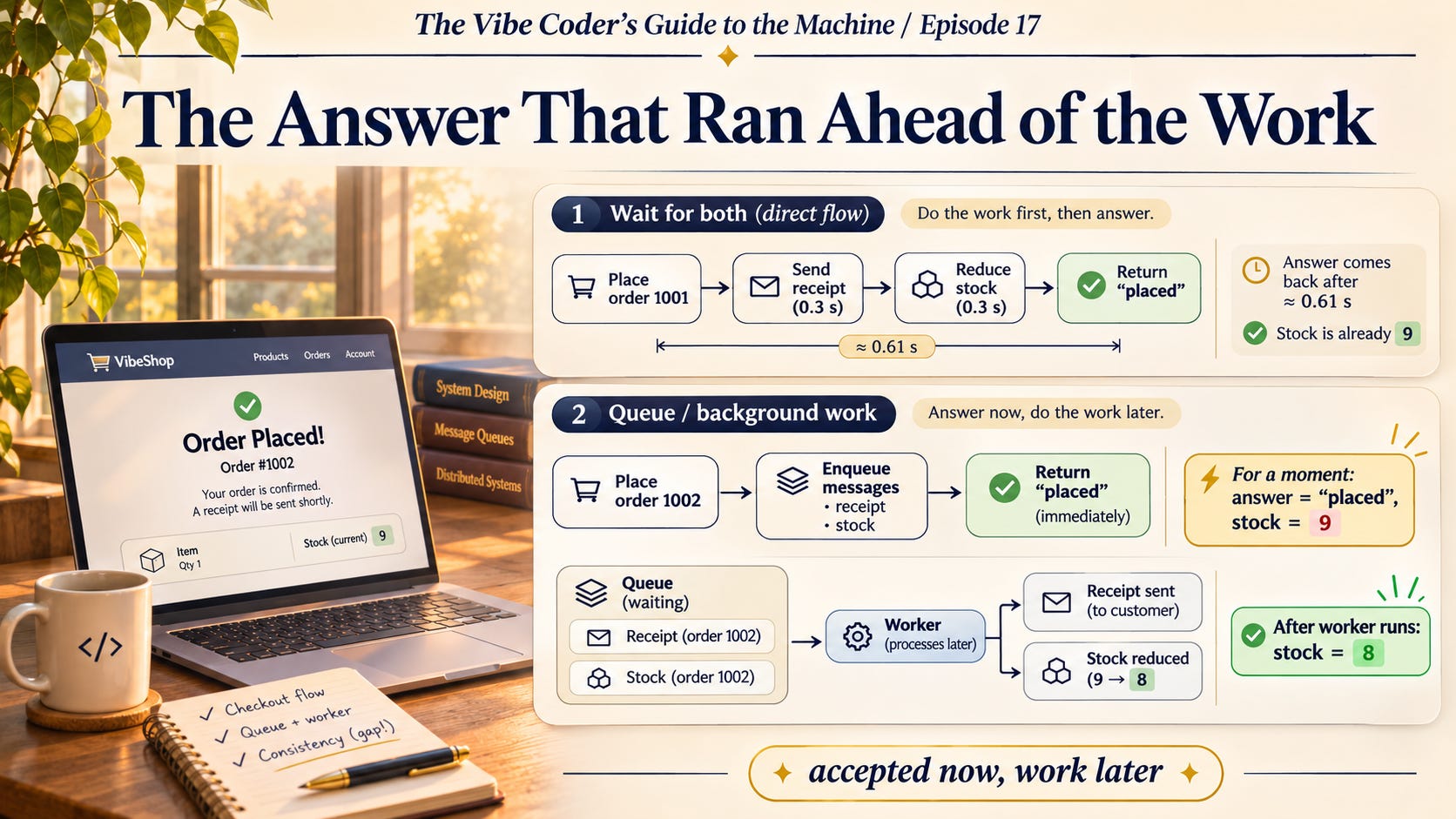
This is Episode 17 of The Vibe Coder’s Guide to the Machine: computer science for a new generation.
The checkout button on your shop shows a small spinner after the customer clicks it, and the spinner turns for just a little too long. It is not long enough to look broken, only long enough to notice. Behind the button is the order function you have had for a while, written by an assistant from one sentence of yours: when an order is placed, send a receipt and reduce the stock. Both steps are slow, so you ask the assistant to make checkout faster.
A common answer to that request is to stop doing the slow work while the customer waits. The order function writes down what needs doing and answers at once, and some other part of the program does the work a moment later. The spinner nearly disappears. Something else changes too, and it does not show on the screen. The word the function sends back, “placed”, used to mean the receipt had gone and the stock had moved. Now it means the order was accepted and the work will follow. For a short stretch the answer is ahead of the world, and somebody has to decide what the customer is told during that stretch.
